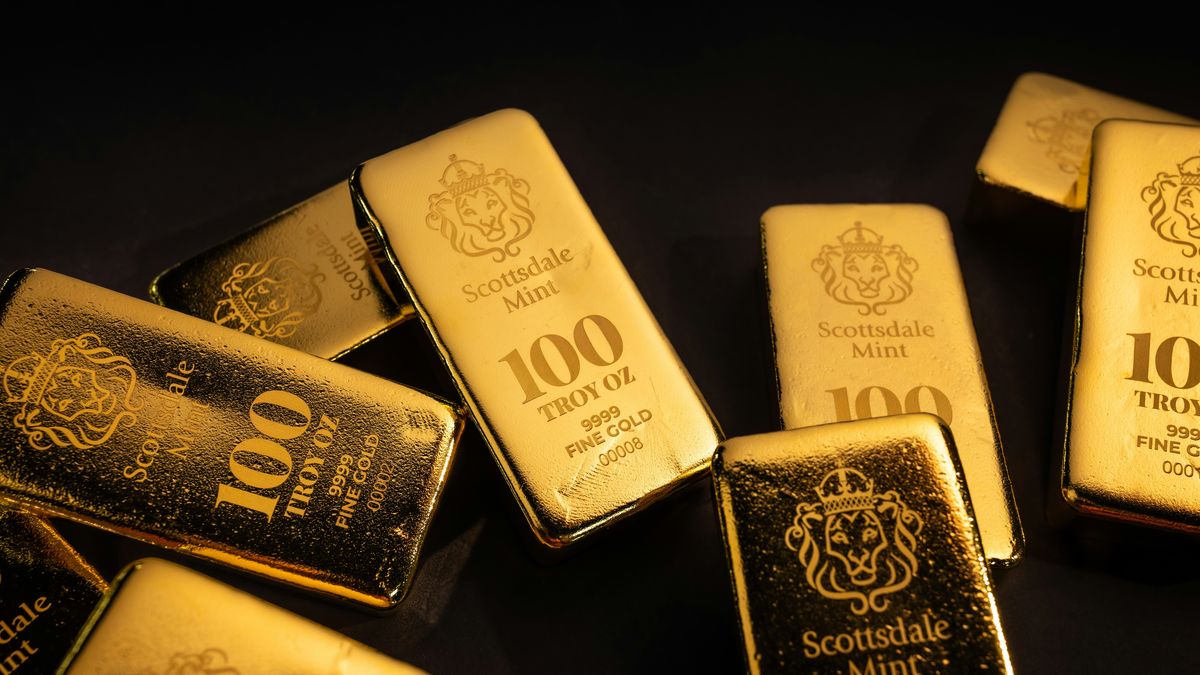
When tracking macro trends and digital asset cycles, one metric cuts through the noise of fiat currency fluctuations: the bitcoin to gold ratio. This simple calculation measures how many ounces of gold a single Bitcoin can buy, giving a unique lens for comparing two of the most debated stores of value in modern finance.
What Exactly Is the Bitcoin-to-Gold Ratio?
The calculation is straightforward:
Bitcoin-to-Gold Ratio = Price of 1 Bitcoin ÷ Price of 1 Ounce of Gold
While this might seem like just another financial metric, it serves a deeper purpose. By comparing Bitcoin directly to gold, rather than to the US dollar or the euro, investors can strip away the steady erosion of fiat currency purchasing power and focus on the relative strength of these two hard-money assets.
A useful point for Irish investors: the ratio is the same whichever currency you use. Divide Bitcoin’s euro price by gold’s euro price and you get exactly the same answer, because the currency cancels out. That is precisely why it is a cleaner comparison than looking at either asset’s price in euro. You can follow the live euro gold price on goldprice.ie.
Why This Ratio Matters for Investors
Both Bitcoin and gold share a fundamental thesis: scarcity. However, they approach it in completely different ways.
Gold has served as a store of value for millennia. Its supply expands slowly through mining, roughly 1.5% to 2% a year. This limited supply growth has helped gold hold its purchasing power across centuries of monetary experimentation. Central banks worldwide continue to add gold to their reserves, recognising its role as a hedge against currency devaluation.
Bitcoin offers something different: fixed, mathematical scarcity. Its supply is capped permanently at 21 million coins, and its issuance schedule cannot change regardless of market conditions. After the most recent halving, Bitcoin’s annual supply growth is now lower than gold’s, and it will fall further with each future halving. Unlike gold, where higher prices can encourage more mining, Bitcoin’s supply cannot respond to price at all.
When the BTC/XAU ratio rises, the market is signalling confidence in digital scarcity and risk-on assets. When it falls, capital is rotating toward traditional defensive stores of value like gold. These rotations can signal shifts in investor sentiment, which makes the ratio a useful indicator when thinking about how to split money between the two.
The Rollercoaster Dynamics: From Peak to Trough
The ratio’s history reads like a tale of two asset classes competing for investor sentiment:
The historical high: During the peak of enthusiasm for digital assets, a single Bitcoin could buy around 40 ounces of gold, a level reached in December 2024 when Bitcoin first cleared $106,000. At that point the market was effectively pricing in continued digital asset dominance and questioning gold’s relevance in a digital age.
The 2026 correction: Early this year, a powerful rally in gold took centre stage. Central bank buying, geopolitical safe-haven demand and de-dollarisation trends pushed gold to a record near $5,589 an ounce in January. At the same time, a sell-off in digital assets pulled Bitcoin down toward $60,000. This double hit compressed the ratio to roughly 12 ounces per Bitcoin in early February, a cycle low that shocked many digital asset supporters who had grown used to a rising ratio.
The current recovery: Market conditions have since shifted. Sustained ETF demand and renewed institutional inflows have re-energised the digital asset space, while gold has eased back from its record. With Bitcoin trading around $84,000 and gold around $4,200 an ounce at the start of October 2026, the ratio has climbed back to approximately 20 ounces of gold per Bitcoin. For more on where Bitcoin could head next, see Is Bitcoin going to go up or down in 2026?
How to Use the Bitcoin to Gold Ratio in Your Strategy
Traders and investors use the bitcoin to gold ratio in several practical ways:
- Relative strength analysis: By comparing the ratio’s direction with your own holdings, you can judge whether you are overweight or underweight either asset relative to market sentiment.
- Market cycle awareness: Extreme readings, near historical highs or lows, have sometimes come before major trend reversals. Some investors use these extremes as a prompt to rebalance.
- Diversification decisions: Knowing which asset is outperforming can help you make more informed decisions about splitting money between Bitcoin, gold and traditional investments.
Technical Inflection Points: What the Charts Are Telling Us
For investors watching technical indicators, the current level of around 20 is a major psychological and mathematical crossroads.
Recovery vs. outperformance: While Bitcoin’s rebound in dollar terms has been impressive, its recovery against gold has been more measured. A ratio of 20 means Bitcoin has recovered less than a third of the ground it lost against gold since the 2024 peak.
Key resistance zones: For Bitcoin to show it is entering a new phase of outperformance against bullion, the ratio would need to break and hold above key resistance zones, which some analysts place in the low 20s, roughly where the ratio started 2026. A rejection at these levels could signal another rotation back into the safety of precious metals. Conversely, a sustained break higher could open the door to the 30+ range seen in previous bull markets.
Two Sides of the Same Hard-Money Coin
Comparing Bitcoin to gold isn’t about declaring one obsolete and the other the winner. Both represent a vote of no confidence in unlimited fiat currency expansion. In a world where governments continue to expand money supplies, both assets offer potential protection against the erosion of purchasing power, through very different mechanisms.
For gold investors, the metal provides tangible, physical ownership that has survived thousands of years of monetary experimentation. You can hold it, store it and transfer it without any digital infrastructure. It has been tested by time. Learn more about buying physical gold in Ireland.
For Bitcoin investors, the cryptocurrency offers 24/7 global access, divisibility into tiny units and fast transfers across borders. Its supply is guaranteed by mathematics rather than geology. See how Bitcoin and gold compare.
Whether you lean toward the physical security of a metal formed in the Earth’s crust or the cryptographic permanence of a decentralised ledger, keeping an eye on the bitcoin to gold ratio remains one of the sharpest ways to read the pulse of global liquidity.
Disclaimer: This article is for informational and educational purposes only and does not constitute financial or investment advice. Prices quoted are approximate as of 1 October 2026. Always do your own research before investing in volatile assets.

Free PDF guide
The Irish Buyer's Guide to Gold
Coins vs bars, VAT rules, and how to never overpay.
No spam. Unsubscribe any time.